
Where are experiments on cats and dogs conducted in Germany?
Animal testing continues to take place behind closed doors to this day. Neither research institutions nor public authorities provide sufficient transparency regarding where, to what extent, and on which animal species experiments are carried out. The animal testing statistics published by the Federal Institute for Risk Assessment are broken down for the individual federal states solely by broad categories of experimental purpose. It is virtually impossible to draw specific conclusions about particular institutions or locations from this data.
The situation is particularly opaque when it comes to dogs and cats – precisely those animal species with which many people have a close emotional bond. Despite their special social significance, it is almost impossible to ascertain where and for what purposes they are used in laboratories.
Against this backdrop, we have carried out a comprehensive investigation. The aim was to systematically disclose, for the first time, which facilities in Germany use dogs and cats in animal experiments and how their use is distributed regionally. The results not only highlight key areas and trends but also make it clear just how significant the existing gaps in information remain.
Research
In order to gain a clearer picture of animal experiments on cats and dogs in Germany and to inform the public, we have launched a comprehensive investigation. The aim was to find out which facilities in Germany actually use cats and dogs. Our investigation was based on official federal state statistics (1) on the use of these animal species between 2015 and 2024. We cross-referenced this data with information from parliamentary questions (2), entries in our Database on Animal Experiments (3), our laboratory address list (4) and information from insider circles.
The result is an initial overview of the main areas of animal experiments on cats and dogs in Germany. When looking at the table below, it should be borne in mind that there are still many gaps and unanswered questions.
|
Federal state |
Facility |
Experiments on dogs |
Experiments on cats |
|
Baden-Württemberg |
All of Baden-Württemberg |
yes |
until 2019 |
|
Boehringer Ingelheim, Biberach an der Riß |
yes |
- |
|
|
Bavaria |
All of Bavaria |
yes |
yes |
|
Ludwig Maximilians University (LMU) Munich, Faculty of Veterinary Medicine |
yes |
yes |
|
|
Klifovet AG, Munich |
yes |
||
|
Berlin |
All of Berlin |
yes |
yes |
|
Free University Berlin, Faculty of Veterinary Medicine |
yes |
yes |
|
|
Bayer AG |
until 2020 |
||
|
Brandenburg |
- |
until 2020 |
until 2020 |
|
Bremen |
- |
- |
- |
|
Hamburg |
- |
- |
until 2017 |
|
Hesse |
All of Hesse |
yes |
yes |
|
Ernst Strüngmann Institute (ESI), Frankfurt |
- |
yes |
|
|
Abbvie GmbH & Co KG, Wiesbaden |
yes |
||
|
Justus Liebig University Gießen, Faculty of Veterinary Medicine |
yes |
||
|
Mecklenburg-Western Pomarania |
All of Mecklenburg-Western Pomerania |
yes |
yes |
|
University Medical Centre, Rostock |
yes |
||
|
Lower Saxony |
All of Lower Saxony |
yes |
yes |
|
LPT, Site Mienenbüttel |
until 2022 |
yes |
|
|
University of Veterinary Medicine Hannover |
yes |
yes |
|
|
Medical University Hannover (MHH) |
yes |
||
|
University of Göttingen |
yes |
||
|
BioMedVet, Walsrode |
yes |
||
|
North Rhine-Westfalia |
All of North Rhine-Westfalia |
yes |
yes |
|
Bayer Animal Health GmbH / Elanco Animal Health GmbH, Leverkusen |
yes |
yes |
|
|
Bayer Health Care GmbH / Bayer Pharmaceuticals, Wuppertal |
yes |
||
|
Heinrich Heine University of Düsseldorf |
until 2018 |
||
|
Rhineland-Palatinate |
All of Rhineland-Palatinate |
yes |
yes |
|
MSD Animal Health, Schwabenheim |
yes |
yes |
|
|
Abbvie Germany, Ludwigshafen |
yes |
||
|
Saarland |
- |
- |
- |
|
Saxony |
All of Saxony |
yes |
- |
|
University of Leipzig, Faculty of Veterinary Medicine |
yes |
||
|
Saxony-Anhalt |
All of Saxony-Anhalt |
yes |
- |
|
Firma Ceva Innovation GmbH, Dessau-Roßlau |
yes |
||
|
Schleswig-Holstein |
All of Schleswig-Holstein |
yes |
yes |
|
University of Kiel |
yes |
||
|
Thuringia |
All of Thuringia |
yes |
- |
Table 1: Facilities where experiments involving dogs and cats are known to be taking place or have taken place.
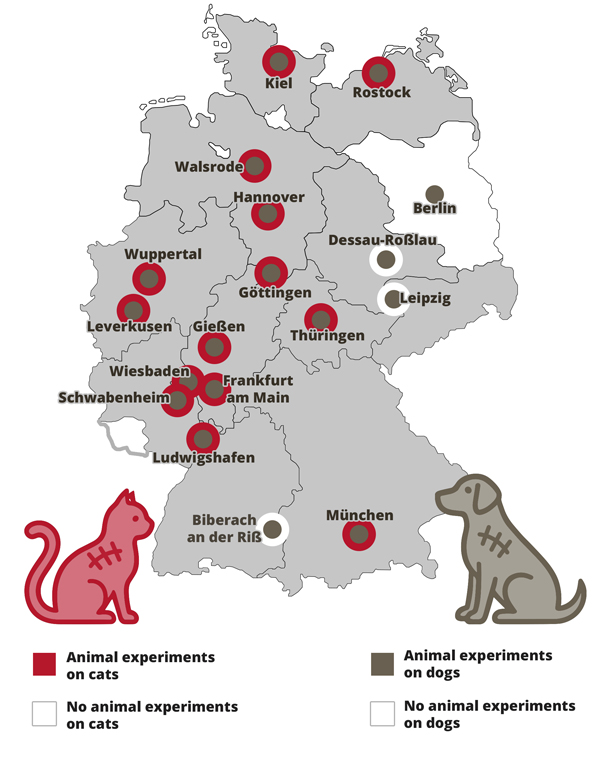
Diagram 1: Map of cities in Germany where experiments on cats or dogs are conducted.
Number of cats and dogs used in Germany
Over the past ten years, between 2,200 and 4,500 dogs per year have been used in animal experiments in Germany, with the figures being significantly higher in the first five years. For cats, the number was between 544 and over 1,000 animals. The figures refer to animals used for the first time and repeatedly, as well as those killed for organ or tissue removal. However, this so-called ‘killing for scientific purposes’ is extremely rare for cats and dogs.
|
Year |
2015 |
2016 |
2017 |
2018 |
2019 |
2020 |
2021 |
2022 |
2023 |
2024 |
|
Dogs |
4.491 |
3.977 |
3.334 |
3.993 |
3.527 |
2.562 |
2.658 |
2.877 |
2.551 |
2.222 |
|
Cats |
1.112 |
766 |
718 |
765 |
954 |
644 |
862 |
538 |
544 |
700 |
Table 2: Use of dogs and cats in animal experiments in Germany (5).
Federal states were cats and dogs are rarely or not used
Bremen, Saarland
No use
Brandenburg
Very few dogs and cats in applied reserach and regulatory testing; since 2020 no use.
Hamburg
2015/2016/2017 2-4 cats, since 2018 no cats and dogs.
Mecklenburg-Western-Pomerania
2015: 16 dogs and no cats; 2016-2022 no cats and dogs.
2024 all of a sudden a very high figure of 99 dogs und 103 cats in applied research.
There are no records of cat experiments from Mecklenburg-Western Pomerania in our database. However, there are two entries relating to dogs from the University Medical Centre Rostock. At the Department of Orthodontics, holes were drilled into the jaws of four beagles to test bone substitute materials (6). At the Department of Haematology, Oncology and Palliative Medicine (Medical Clinic III), bone marrow cells were transplanted into 22 dogs (7). Both series of experiments were presumably carried out in 2012/2013, but were not published until 2022/2024. It is unclear how the sudden rise in the number of cats and dogs came about. Were several series of experiments perhaps started several years ago and the animals only counted in 2024?
Other animal research facilities in Mecklenburg-Western Pomerania include the University of Greifswald and the Leibniz Institute for Farm Animal Ecology in Dummerstorf, neither of which is likely to be involved in dog experiments. Could the Friedrich Loeffler Institute on the island of Riems have conducted a study on dogs? The high number of animals suggests the pharmaceutical industry, but to our knowledge, no such companies are based in the state. Or has a specialist laboratory recently set up in Mecklenburg-Western Pomerania?
Saxony-Anhalt
No use of cats in Saxony-Anhalt.
2015-2019: 7-24 dogs in regularly testing; 2022: 40 dogs, otherwise no use.
According to the response to a parliamentary question, one facility holds a licence to keep 96 dogs (8). It is not clear from the response which facility this is.
Information from the Camp Beagle group indicates that twenty dogs were delivered to the company Ceva Innovation GmbH in 2012. It is likely that this pharmaceutical company, based in Dessau-Roßlau, is responsible for all the use of dogs in Saxony-Anhalt.
Schleswig-Holstein
2015-2019: 0-2 dogs and cats
2020: 21 cats for various puposes
2021/2022: few dogs and cats in education and training
2023: 40 dogs and 2 cats in education and training
2024: 72 dogs and 2 cats education and training
According to the response to a parliamentary question (9), dogs of private persons have been used at the University of Kiel for training animal care assistants. Other dogs of private persons were used at a private veterinary training facility. This could be the company Johnson & Johnson MEDICAL in Norderstedt.
The cats are also likely to have been associated with these two facilities.
Thüringen
No use of cats in Thuringia.
2015-2020: few dogs in basic reserach, applied reserach and education and training
2021: no cats and dogs
2022: 100 dogs in basic reserach, 10 dogs in education and training
2023: 10 dogs in education and training
2024: 23 dogs in applied research
According to the response to a parliamentary question, there is one facility, but it no longer holds a licence to keep animals (10). The last recorded use of beagles was in 2018. So where do the figures in the statistics come from? Possible candidates are the University of Jena or the FZMB e.V. Research Centre for Medical Technology and Biotechnology in Bad Langensalza.
Saxony
No ise of cats in Saxony.
2015-2019: between 18 and 156 dogs in basic research and applied research
2020-2023: some dogs (11-47) in basic research and education/training
2024: 16 dogs in education and training
In the response to a parliamentary question, the Faculty of Veterinary Medicine at the University of Leipzig is cited as the only institution holding a licence to keep 11 dogs (11). The figures from the federal state statistics are consistent with this information. Dogs from the university’s own stock and privately owned dogs are certainly used in veterinary training. Basic research is also likely to be carried out there. Our animal experimentation database contains no entries relating to dogs in Leipzig during the period under review.
Federal states with high use of cats and dogs
Baden-Württemberg
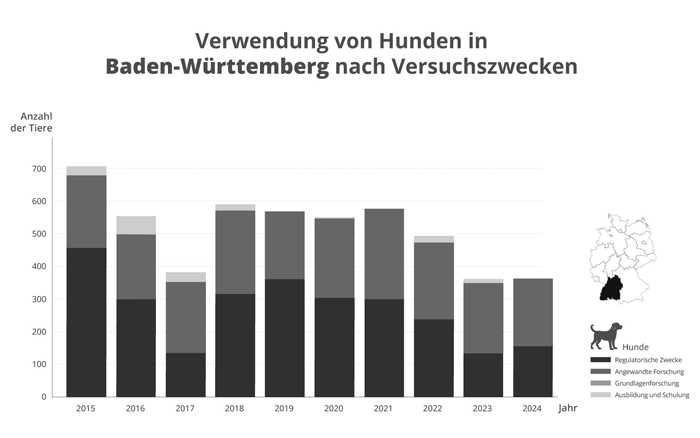
Diagram 2: Number of dogs used in animal experiments in Baden-Württemberg, broken down by year and purpose.
Cats
A few cats were used in the earlier years in the field of education and training; since 2020 no use of cats at all.
Dogs
From 2015 onwards, around or over 500 dogs were used for regulatory and applied research purposes (the highest figure being 687 in 2015). Over the last two years (2023/2024), this figure fell to around 360 dogs per year. In addition, up to 47 dogs were used for education and training purposes in each year.
The dogs used in regulatory and applied research, and possibly also those used for education and training, are very likely to be used at Boehringer Ingelheim in Biberach an der Riß. Our database contains two entries for Boehringer Ingelheim. In one study, probes were implanted into the hearts of 30 dogs to test a cardiovascular drug (12). In another study, a test substance was administered daily to 13 dogs via gavage into the stomach for 28 days. After 4 weeks, the animals were killed (13).
Another possible location for the use of dogs is the site of the pharmaceutical company Roche in Grenzach.
As hardly any dogs are used in basic research, it is questionable whether animal experiments involving dogs are carried out at the universities in Baden-Württemberg – namely Freiburg, Heidelberg, Karlsruhe, Konstanz, Mannheim, Stuttgart-Hohenheim and Tübingen – as well as at various other institutions such as the Max Planck Institutes.
Bavaria
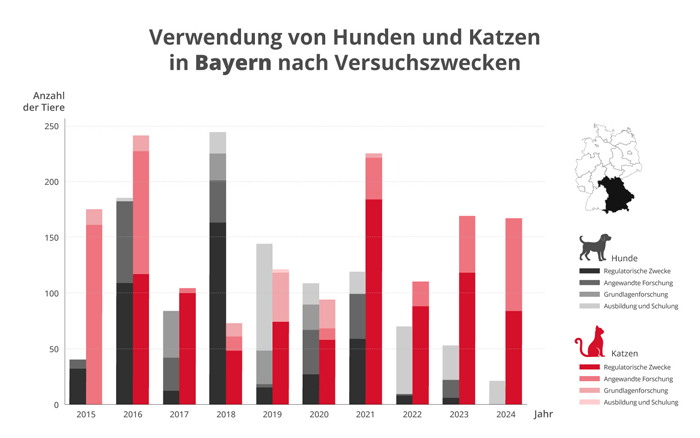
Diagram 3: Number of cats and dogs used in animal experiments in Bavaria, broken down by year and purpose.
Cats
Since 2021, Bavaria has been the second-largest user of cats for experimental purposes after North Rhine-Westphalia, accounting for between a quarter and a third of all cat experiments (110–225 animals). Cat numbers were also high in previous years, often exceeding 100 or 200. All cats were used in the fields of regulatory testing and applied research.
The high number of cats is likely attributable to the Ludwig Maximilian University (LMU) in Munich, specifically the Chair of Animal Nutrition and Dietetics at the Faculty of Veterinary Medicine in Oberschleißheim. Our database lists three entries from this institution, involving a total of 45 cats. All of these studies concern the influence of diet composition on kidney function (14,15,16).
Hunde
The number of dogs used in regulatory testing varied significantly between 12 and 169 up until 2021. The same applies to applied research. From 2022, the number fell sharply in both areas; by 2024, no dogs were used in these areas at all. Basic research played a role only in the years 2018–2020 (22–30 dogs). From 2018, dogs were regularly used for education and training (19–61 dogs).
According to a parliamentary question, in 2018 dogs were kept at the Chair of Bacteriology and Mycology, the Chair of Virology and the Chair of Animal Nutrition and Dietetics at the Faculty of Veterinary Medicine at LMU Munich (17). It can be assumed that the Faculty of Veterinary Medicine also uses dogs in the field of education and training.
Another inquiry revealed that in 2021 there were fewer than 10 institutions in Bavaria where applications for dog experiments were submitted or experiments were carried out. These are located in the administrative districts of Middle Franconia, Lower Franconia and Upper Bavaria (18). It is unclear exactly which institutions these are.
In 2019, we filed a criminal complaint against the Friedrich Alexander University Erlangen (FAU) on suspicion of illegal experiments on dogs and pigs (19). This suspicion had arisen from articles in a scientific journal. The criminal complaint was dropped and the competent authority stated that no experiments on dogs had taken place. There is no evidence that dogs were used at the FAU at a later date.
According to its own website, the contract research laboratory Klifovet AG, Munich, tests veterinary products on dogs, amongst other animals (20). It can be assumed that some of the dogs listed in the statistics were used here.
It is also highly likely that dogs are used at the company NUVISAN Pharma Service in Grafing (21).
Another contract laboratory is BSL Bioservice GmbH in Munich. We do not know whether dogs are used for testing there.
Dog experiments are also conceivable at the Technical University of Munich, with campuses in Munich and Freising, the Helmholtz Centre Munich in Neuherberg, and the pharmaceutical company Roche in Penzberg. At these locations, regulatory animal testing on dogs may be carried out.
Berlin

Diagram 4: Number of dogs used in animal experiments in Berlin, broken down by year and purpose.
Cats
In regulatory and applied research, cats were used only to a limited extent and have not been used at all since 2022. 22–46 cats were used in basic research annually up to 2020, and none at all since 2021.
Several entries in our animal experimentation database suggest that cats are mainly used at the Faculty of Veterinary Medicine at Free University Berlin. The research focuses on the effects of the composition of cat food (22, 23, 24).
Dogs
Each year, some dogs were used in regulatory testing and applied research. 2016 stands out with 254 dogs. The figures have fallen significantly since 2022. In basic research, too, the figures have dropped from over 90 in the early years to between 1 and 11 in the last four years. In contrast, the rising number in the field of education and training is striking. The number has risen to over 100 dogs in the last three years.
The main user of dogs is Free University (FU) Berlin, specifically the Faculty of Veterinary Medicine. In February 2025, 16 dogs were kept at the Institute of Animal Nutrition, 18 dogs at the Institute of Pharmacology and Toxicology, and 25 dogs at the Institute of Parasitology and Tropical Medicine (25). There had been complaints from local residents regarding the latter in 2024. Antiparasitic agents were tested on the animals (26).
The dogs used for education and training purposes are also – at least for the most part – attributable to the Faculty of Veterinary Medicine at the FU, as revealed by a parliamentary question. According to this, between 28 and 41 dogs were used each year from 2021 to 2024 (27). However, there is no explanation for the sharp rise in numbers since 2022.
Until 2020, dogs were also used by the company Bayer AG (25). This is reflected in the falling figures in the areas of regulatory testing and applied research.
Hesse
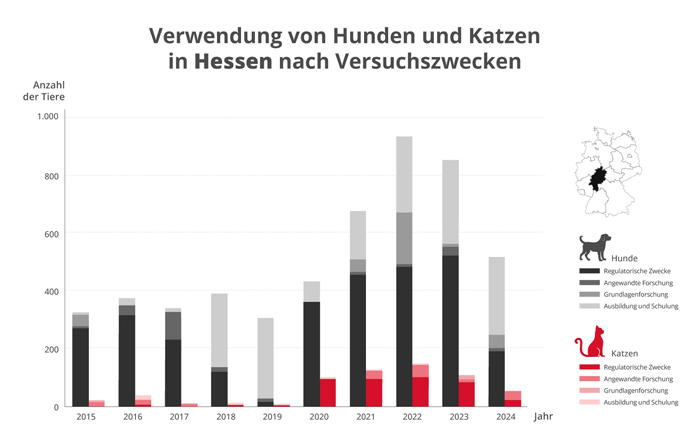
Diagram 5: Number of cats and dogs used in animal experiments in Hesse, broken down by year and purpose.
Cats
Cats are predominantly used in regulatory testing and applied research. The numbers were mostly in the low double-digit figures. Only the year 2002 stands out, with 103 cats used in regulatory testing and 42 in applied research.
The cats used in applied and basic research (14 in 2022) are very likely attributable to the Ernst Strüngmann Institute (ESI) in Frankfurt. We have several entries from this facility in our database, all in the area of neurological research. Anaesthetised cats have a hole drilled into their skulls, electrodes are inserted into the brain, and stimuli (e.g. flashes of light or symbols on a monitor) are presented before their eyes, whilst neuronal signals are measured. In one case, the experiments lasted five days. At the end, all the cats were killed (28, 29, 30, 31).
The pharmaceutical companies Merck in Darmstadt, Sanofi in Frankfurt, CSL Behring in Marburg, CSK Vaccines in Marburg and/or AbbVie in Wiesbaden are likely candidates for the use of cats in regulatory testing and applied research.
Dogs
In recent years, Hesse has been Germany’s largest (2021, 2022) or second-largest (2020, 2024) user of dogs! In previous years, the figures for Lower Saxony (LPT site in Mienenbüttel) and North Rhine-Westphalia (Bayer) were significantly higher.
A large number of dogs were used in regulatory studies across all years, often over 300 or 400 animals (up to a peak of 526 dogs in 2023). The only exception is 2019, with just 16 dogs in this area. From 2018 onwards, there were also very high figures in the field of education and training, mostly over 200 animals (a maximum of 292 dogs in 2023). Basic research only plays a role from 2021 onwards, with between 30 and 179 dogs.
According to research by the group Camp Beagle, dogs were supplied from the USA to the pharmaceutical company AbbVie, although it is unclear whether this was to their site in Wiesbaden (Hesse) or the one in Ludwigshafen (Rhineland-Palatinate).
In 2012, dogs were used by the pharmaceutical companies Merck KgaA, Darmstadt, and Sanofi-Aventis GmbH, Darmstadt (32). It is conceivable that these companies continue to use dogs and are thus responsible for the very high figures in the area of regulatory testing. Similarly, the dogs used in education and training could be allocated to the pharmaceutical industry to train their staff.
Dogs were used for both research and training at the Faculty of Veterinary Medicine at Justus Liebig University Gießen (33). According to this source, the research includes MRI and CT scans for neurological investigations, kidney function measurements, testing of antidepressants, and blood donations for canine patients.
Lower Saxony
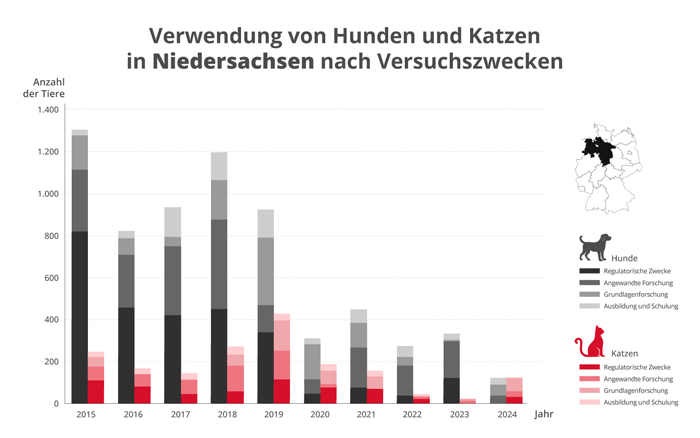
Diagram 6: Number of dogs used in animal experiments in Lower Saxony, broken down by year and purpose.
Cats
In Lower Saxony, the numbers remained consistently high up to 2021, with over 100 cats in some cases in both regulatory testing and applied research. From 2022 onwards, these figures decreaed significantly (22–32 cats). In basic research, around 50–70 cats were usually used, with the exception of 2019, when 144 cats were used. From 2022 onwards, fewer animals were also used in basic research (0–22). Additional cats (up to 37) were used for training purposes.
At the Lower Saxony site of the Laboratory for Pharmacology and Toxicology (LPT) in Mienenbüttel, cats were used for toxicity testing alongside monkeys and dogs until the laboratory was forced to close in 2022 following public pressure arising from an undercover investigation. This aligns with the figures, which are set to decline sharply in the regulatory and applied sectors from this year onwards. It is unclear where the reduced number of regulatory tests are carried out following the closure of the LPT.
Basic and applied research on cats is carried out at the University of Veterinary Medicine Hannover (TiHo), the Medical University Hannover (MHH) and the University of Göttingen. We have entries of all three in our database. At the TiHo, cats were infected with toxoplasmosis (34, 35), lungworms (36, 37) and hookworms (38). Another study investigated whether cats, when a sound is made behind their head, tend to turn their head to the left or to the right (39). At the MHH, cats were chemically deafened to test a hearing aid (40, 41, 42, 43, 44). At the University of Göttingen, a painful inflammation of the calf muscle was induced in cats. The spinal cord was then exposed under anaesthesia to measure neuronal signals (45).
In the field of training, around 30 cats were used year on year. From 2022, the number fell significantly. It can be assumed that these animals were used by the LPT to train its staff. Further cats are likely to be used by the TiHo for veterinary students.
Dogs
In some years (2015, 2018), Lower Saxony was Germany’s largest user of dogs. The total figures ranged from 822 to over 1,400 animals. In 2020, the figure fell to 300–400 per year, and by 2024 it had dropped to ‘just’ 121 dogs. Regulatory experiments accounted for the largest share – over 400 before 2019, and between 0 and 123 dogs thereafter.
Applied research also recorded consistently high numbers of dogs, often exceeding 100 animals (with a peak of 426 in 2018). By 2024, the figure had fallen to 39 dogs.
Regulatory research and possibly some applied research can be attributed to the LPT, where contract research involving dogs was carried out on a large scale until 2022. The decline, already visible from 2020, may be due to increased public pressure following the publication of the undercover investigation.
Another contract laboratory is BioMedVet in Walsrode. According to an entry in our database, a heart medication was tested on dogs here commissioned by Boehringer Ingelheim (12).
Dogs were used primarily at the University of Veterinary Medicine Hannover (TiHo) for basic research, large parts of applied research, and for training purposes. We have documented several examples from the TiHo in our database. For instance, the cardiovascular effects of an anti-anxiety drug were tested on dogs (46), cold therapy as a pain treatment (47), the digestibility of slaughterhouse by-products in dog food (48), chemical castration (49), a worming treatment (38), pain experiments (50, 51, 52) and the side effects of diclofenac (53).
These findings are consistent with research by the group Camp Beagle, which indicates that dogs were delivered from the USA to the TiHo Hannover in 2021 and 2022.
The TiHo is also likely to be responsible for the use of dogs for education and training purposes.
Another experiment documented in our database, in which a heart medication was tested on dogs, probably took place at Göttingen University Hospital (54). Dog experiments are also conceivable at the Medical University Hannover (MHH). No other potential laboratories for dog experiments in Lower Saxony could be identified.
North Rhine-Westfalia
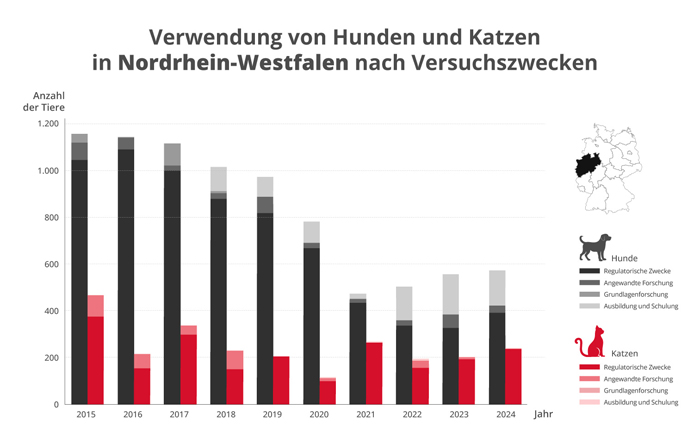
Diagram 7: Number of cats and dogs used in animal experiments in North Rhine-Westfalia, broken down by year and purpose.
Cats
The figures were almost always around or above 200 cats per year; in 2015, the number was over 400 cats. North Rhine-Westphalia was thus the largest consumer of cats in 2015, 2017 and 2021–2024. The focus was clearly on regulatory testing, with figures often around or above 200 animals. Applied research and training accounted for a much smaller proportion.
The phamaceutical company Bayer Animal Health in Leverkusen is likely to be responsible for the largest share. Our database contains a study from 2020 in which an anti-parasitic agent was tested on 72 cats (55). In 2020, Bayer sold its animal health division to Elanco Animal Health GmbH.
Dogs
North Rhine-Westphalia was Germany’s largest user of dogs in 2016, 2017, 2019, 2020 and 2024. Up to and including 2020, the figures stood at over 1,000 animals; thereafter, there was a decline to over 500 animals. Regulatory testing accounted for the vast majority. In 2016, for example, these made up around 96%. In 2024, they still accounted for more than two-thirds (68%) of all dog experiments.
Applied research played a minor role, as does basic research, which even was zero over the last six years. It is striking that the number of dogs used for education and training purposes has risen significantly in recent years, reaching 174 animals in 2023.
Bayer Animal Health GmbH in Leverkusen is a major user of dogs. For example, a worming treatment was tested on 24 beagles (56). The decline in figures for regulatory testing from 2021 onwards may be due to the sale to Elanco Animal Health. However, it is likely that dog testing will continue under the new name.
However, the main facility responsible for the high number of dogs is likely to be Bayer HealthCare AG, or Bayer Pharmaceuticals in Wuppertal, where the company tests drugs for human use. Our database contains numerous studies. For example, a test compound for the prevention of strokes was tested on dogs; this compound is already in phase 3 of clinical trials in humans (57). In beagles, high blood pressure (58, 59) and heart failure (60, 61) were induced in order to test treatments for human patients.
The dog experiments in the field of education and training could be attributed to the training of Bayer employees.
According to investigations by Camp Beagle, 241 beagles were supplied to Bayer AG and Bayer Animal Health by the US-based Marshall breeding facility between August 2021 and January 2023.
Until 2018, dental experiments on dogs were carried out for many years at the University Hospital of Heinrich Heine University Düsseldorf. In our database on animal experiments, 8 studies are listed in which the Polyclinic for Dental Surgery, the Polyclinic for Orthodontics and the Clinic for Oral, Maxillofacial and Plastic Facial Surgery are named as the responsible institutions. Several molars were extracted from the animals and holes were drilled into the jawbone (62, 63, 64). Titanium implants were often inserted as well (65), or periodontitis was induced by inserting a cotton thread between the tooth and the gum, allowing bacteria to grow in the area (66).
At the Department of Anaesthesiology at Düsseldorf University Hospital, haemorrhagic shock was induced in dogs by draining 20% of their blood volume in order to investigate the effects of various active substances (67, 68).
In 2018, 24 dogs were reportedly still living at the Central Facility for Animal Research (ZETT) at the University of Düsseldorf, although no further experiments were being carried out on them. By the summer of 2024, there were only four dogs left, two of which were rehomed to private owners following a campaign by Doctors Against Animal Experiments (69).
Rhineland-Palatinate
Cats
Cats were used almost exclusively in applied research. The numbers were mostly in the low double figures. In 2024, only two animals were used.
Rhineland-Palatinate is home to a number of pharmaceutical companies, all of which are potential candidates for conducting cat experiments in applied research. A recent job advertisement indicates that the veterinary pharmaceutical manufacturer MSD Animal Health in Schwabenheim carries out animal experiments on cats and dogs (68). In addition, similar experiments are also conceivable at Boehringer Ingelheim in Ingelheim, as well as at AbbVie GmbH & Co KG, Abbott GmbH & Co KG and BASF, all three of which are based in Ludwigshafen.
Dogs
The number of dogs has fallen steadily, from 405 dogs in 2015 to 175 in 2024. Regulatory testing and applied research account for roughly equal proportions, with the number of animals used in each ranging from 22 to 227. A small number of dogs are also used in basic research and training.
According to research by Camp Beagle, a total of 54 beagles were shipped from the USA to AbbVie Germany in 2021–2022. It is unclear whether this involved the site in Wiesbaden (Hesse) or Ludwigshafen (Rhineland-Palatinate).
Dog experiments are carried out at MSD Animal Health in Schwabenheim, as indicated by a job advertisement (70). They are also conceivable at the pharmaceutical companies Boehringer Ingelheim, Abbott and BASF.
Conclusion
This research shows that animal experiments on dogs and cats continues to take place on a significant scale in Germany – albeit with a slight downward trend. Between 2015 and 2024, several thousand dogs and several hundred cats were used in experiments each year. It is particularly striking that the use of these animals is heavily concentrated in certain regions: whilst some federal states report few or no experiments involving dogs and cats, others – notably North Rhine-Westphalia, Lower Saxony, Hesse, Baden-Württemberg and Bavaria – have been major centres of such use for years.
The majority of animal experiments take place in the fields of regulatory testing and in applied research, often conducted by the pharmaceutical industry. Facilities run by large companies, as well as veterinary faculties and contract laboratories, play a central role in this. At the same time, certain developments – such as the closure of the contract laboratory LPT in Lower Saxony – show that public pressure can have an impact on the number of animal tests carried out.
The analysis also reveals significant shortcomings in transparency. Official statistics provide only certain figures, and even responses to parliamentary questions are often lacking in detail. Consequently, conclusions regarding specific institutions can only be drawn through extensive research in scientific publications, job advertisements and insider information. This lack of transparency makes it considerably more difficult to conduct an objective public and political assessment.
Experiments on dogs and cats – like all other animal experiments – are ethically unjustifiable and scientifically nonsensical, and must be abolished immediately.
28/05/2026
Dr Corina Gericke D.V.M.
References
- Anzahl der Versuchstiere in Deutschland im Jahr 2024 (und vorhergehende Jahre): Aufschlüsselung nach Bundesländern. Bundesinstitut für Risikobewertung
- Datenbank Transparente Tierversuche. Ärzte gegen Tierversuche www.ttv-datenbank.de
- Datenbank Tierversuche. Ärzte gegen Tierversuche www.datenbank-tierversuche.de
- Adressliste Tierversuchslabore. Ärzte gegen Tierversuche, 24.07.2024
- Verwendung von Versuchstieren im Berichtsjahr 2024 (und vorhergehende Jahre). Bundesinstitut für Risikobewertung
- Duske K. et al. Changes in the periodontal gap after long-term tooth movement into augmented critical-sized defects in the jaws of beagle dogs. Dentistry Journal 2024; 12(12): 386
- Schäfer S. et al. Engraftment effects after intra-bone marrow versus intravenous allogeneic stem cell transplantation in a reduced-intensity conditioning dog leukocyte antigen-identical canine model. Transplantation and Cellular Therapy 2022; 28: 70.e1-70.e5
- Drucksache 8/5587. Parlamentarische Anfrage im Landtag von Sachsen-Anhalt, von Hendrik Lange, 05.06.2025
- Drucksache 20/3110. Parlamentarische Anfrage im Schleswig Holsteinischen Landtag, von Christian Dirschauer, 14.04.2025
- Drucksache 8/1057. Parlamentarische Anfrage im Thüringer Landtag, von Jens Thomas, 06.05.2025
- Drs.-Nr.: 8/1642 und Drs.-Nr.: 8/1644. Parlamentarische Anfrage Sächsischer Landtag, von Susanne Schaper, 5. und 10.03.2025
- Kuhlmann O. et al. Pimobendan oral solution is bioequivalent to pimobendane chewable tablets in beagle dogs. Journal of Veterinary Internal Medicine 2025; 39(1): e17248
- Doerfler H. et al. Untargeted metabolomic analysis combined with multivariate statistics reveal distinct metabolic changes in GPR40 agonist-treated animals related to bile acid metabolism. Frontiers in Molecular Bioscience 2021; 7: 598369
- Steffen C. et al. The phosphate additives phosphoric acid and sodium phosphate lead to hyperphosphatemia as well as increased FGF23 and renal phosphate excretion in healthy cats. Journal of Urology and Renal Diseases 2023; 08: 1339
- Steffen C. et al. High intake of sodium chloride for 28 days causes no effect on serum FGF23 concentrations in cats. Animals 2022; 12: 3195
- Dobenecker B et al. Effect of a high phosphorus diet on indicators of renal health in cats. Journal of Feline Medicine and Surgery 2018; 20(4): 339-343
- Drucksache 17/20064. Parlamentarische Anfrage im Bayerischen Landtag, von Horst Arnold, 15.06.2018
- Drucksache 19 / 7422. Parlamentarische Anfrage Bayerischer Landtag, von Paul Knoblach, 11.08.2025
- Verdacht auf illegale Tierversuche an Hunden in Erlangen. Ärzte gegen Tierversuche stellt Strafanzeige. Ärzte gegen Tierversuche, Pressemitteilung vom 10.04.2019
- Klifovet.com (retrieved on 19/05/2026)
- Tierversuche an Hunden: Leiden in den Laboren. NDR-Reportage 2023 (Link zu YouTube) (retrieved on 19/05/2026)
- Paßlack N. et al. Influence of protein concentration and quality in a canned diet on urine composition, apparent nutrient digestibility and energy supply in adult cats. BMC Veterinary Research 2018; 14; 225
- Paßlack N. et al. Impact of increasing dietary calcium levels on calcium excretion and vitamin D metabolites in the blood of healthy adult cats. PLoS ONE 2016; 11(2): e0149190
- Paßlack N. et al. Effects of dietary arginine, ornithine, and zeolite supplementation on uremic toxins in cats. Toxins 2018; 10(5). Doi: 10.3390/toxins10050206
- Drucksache 19 / 21 635. Parlamentarische Anfrage Berliner Landtag, von Dr. Stefan Taschner, 26.02.2025
- Das Leiden der Versuchs-Beagle. BZ, 07.06.2024 (retrieved on 19/05/2026)
- Drucksache 19 / 23 746 Parlamentarische Anfrage an das Abgeordnetenhaus Berlin von Dr. Stefan Taschner, 15.09.2025
- Lewis C.M. et al. Top-down modulation of visual cortical stimulus encoding and gamma independent of firing rates. bioRxiv 2024; doi.org/10.1101/2024.04.11.589006
- Lazar A. et al. Visual exposure enhances stimulus encoding and persistence in primary cortex. PNAS 2021; 118(43): e2105276118
- Caruso L. et al. In vivo magnetic recording of neuronal activity. Neuron 2017; 95: 1283-1291
- Ni J. et al. Gamma-rhythmic gain modulation. Neuron 2016: 92; 240-251
- Drucksache 19/1215. Parlamentarische Anfrage im Hessischen Landtag, von Ursula Hammann, 22.01.2015
- Drucksache 19/5238. Parlamentarische Anfrage im Hessischen Landtag, von Ursula Hammann, 24.10.2017
- Grochow T. et al. Reduced neural progenitor cell count and cortical neurogenesis in guinea pigs congenitally infected with Toxoplasma gondii. Communications Biology 2023; 6: 1209
- Grochow T. et al. Establishment and validation of a guinea pig model for human congenital toxoplasmosis. Parasites & Vectors 2021; 14: 389
- Raulf M.K. et al. Efficacy of Bravecto R Plus spot on solution for cats (280 mg/ml fluralaner and 14 mg/ml moxidectin) in the prevention of feline Aelurostrongylus abstrusus infection evaluated in a multi diagnostic approach. Parasites & Vectors 2024; 17:193
- Raue K. et al. Efficacy of Bravecto® Plus spot-on solution for cats (280 mg/ml fluralaner and 14 mg/ml moxidectin) for the prevention of aelurostrongylosis in experimentally infected cats. Parasites and Vectors 2021; 14: 110
- Hauck D. et al. Evaluation of a commercial coproantigen immunoassay for the detection of Toxocara cati and Ancylostoma tubaeforme in cats and Uncinaria stenocephala in dogs.
- Konerding W.S. et al. The head turn paradigm to assess auditory laterality in cats: influence of ear position and repeated sound presentation. PeerJ 2017; 5: e3925. doi: 10.7717/peerj.3925
- Yusuf P.A. et al. Deficient recurrent cortical processing in congenital deafness. Frontiers in Systems Neuroscience 2022; 16: 806142
- Konerding W.S. et al. Encapsulated cell device approach for combined electrical stimulation and neurotrophic treatment of the deaf cochlea. Hearing Research 2017; 350: 110-121
- Land R. et al. Congenital deafness reduces, but does not eliminate auditory responsiveness in cat extrastriate visual cortex. Neuroscience 2018; 375: 149-157
- Yusuf P.A. et al. Induced cortical responses require developmental sensory experience. Brain 2017: 140(12); 3153-3165
- Land R. et al. Cross-modal plasticity in higher-order auditory cortex of congenitally deaf cats does not limit auditory responsiveness to cochlear implants. The Journal of Neuroscience 2016: 36(23); 6175-6185
- Schomburg E.D. et al. Long lasting activity of nociceptive muscular afferents facilitates bilateral flexion reflex pattern in the feline spinal cord. Neuroscience Research 2015: 95; 51-58
- Kästner S.B.R. et al. Effects of tasipimidine premedication with and without methadone and dexmedetomidine on cardiovascular variables during propofol-isoflurane anaesthesia in Beagle dogs. Veterinary Anaesthesia and Analgesia 2024; 51(3): 253-265
- Wittenberg-Voges L. et al. Cold stimulation is feasible and has limited aversiveness in healthy, pain-free dogs. American Journal of Veterinary Research 2024; 85(1): ajvr.23.07.0169
- Chuppava B. et al. Impact of animal by-products on diet digestibility and fecal quality in beagle dogs. Life 2023; 13: 850
- Stempel S. et al. What happens in male dogs after treatment with a 4.7 mg deslorelin implant? II. Recovery of testicular function after implant removal. Animals 2022; 12: 2545
- Amon T. et al. Plasma levels of a methadone constant rate infusion and their corresponding effects on thermal and mechanical nociceptive thresholds in dogs. BMC Veterinary Research 2021; 17: 35
- Spitmann N.C. Einfluss von Metamizol alleine und in Kombination mit Levomethadon auf die minimale alveoläre Konzentration von Sevofluran und auf thermische und mechanische Reizschwellen bei Beagle-Hunden. Veterinärmedizinische Dissertation, Hannover 2018
- Schütter Al. et al. Influence of tramadol on acute thermal and mechanical cutaneous nociception in dogs. Veterinary Anaesthesia and Analgesia 2017: 44; 309-316
- Selvaraj S. et al. The pathogenesis of diclofenac induced immunoallergic hepatitis in a canine model of liver injury. Oncotarget 2017; 8(64): 107763-107824
- Vettel C. et al. Phosphodiesterase 2 protects against catecholamine-induced arrhythmia and preserves contractile function after myocardial infarction. Circulation Research 2017; 120(1): 120-132
- Heuer L. et al. Efficacy of imidacloprid 10%/moxidectin 1% spot-on formulation (Advocate®) in the prevention and treatment of feline aelurostrongylosis. Parasites Vectors 2020; 13: 65
- Petry G. et al. Evaluation of the Adulticidal Efficacy of Imidacloprid 10 %/Moxidectin 2.5 % (w/v) Spot-on (Advocate®, Advantage® Multi) against Dirofilaria repens in Experimentally Infected Dogs. Parasitology Research 2015: 114 Suppl 1; S131-144
- Brase C. et al. No influence of asundexian on cardiac repolarization. Clinical Pharmacology in Drug Development 2024; 13(3): 265-280
- Wunder F. et al. Identification and characterization of the new generation soluble guanylate cyclase stimulator BAY-747 designed for the treatment of resistant hypertension. British Journal of Pharmacology 2023; 180(19), 2500-2513
- Vogel J. et al. sGC stimulation lowers elevated blood pressure in a new canine model of resistant hypertension. Hypertension Research 2021; 44: 1568-1577
- Boden K. et al. Telemetric long-term assessment of autonomic function in experimental heart failure. Journal of Pharmacological and Toxicological Methods 2023; 124: 107480
- Mondritzki T. et al. Cardiac output improvement by pecavaptan: a novel dual-acting vasopressin V1a/V2 receptorantagonist in experimental heart failure. European Journal of Heart Failure 2021; 23: 743–750
- Parvini P. et al. Histomorphometrical assessment of vertical alveolar ridge augmentation using extracted tooth roots in the canine. Clinical Oral Investigations 2019; 24: 317-323
- Becker K. et al. Microstructural volumetric analysis of lateral ridge augmentation using differently conditioned tooth roots. Clinical Oral Investigations 2019; 23: 3063-3071
- Schorn L. et al. The use of solvent-preserved human and bovine cancellous bone blocks for lateral defect augmentation - an experimental controlled study in vivo. Head & Face Medicine 2021; 17: 21
- Becker K. et al. Biomechanical, micro-computed tomographic and immunohistochemical analysis of early osseous integration at titanium implants placed following lateral ridge augmentation using extracted tooth roots. Clinical Oral Implants Research 2017; 28(3): 334-340
- Schwarz F. et al. Periodontally diseased tooth roots used for lateral alveolar ridge augmentation. A proof-of-concept study. Journal of clinical peridontology 2016; 43(9): 797-803
- Truse R et al. Topical melatonin improves gastric microcirculatory oxygenation during hemorrhagic shock in dogs but does not alter barrier integrity of Caco-2 monolayers. Frontiers in Medicine 2020; 7(510)
- Hof L et al. Local carbachol application induces oral microvascular recruitment and improves gastric tissue oxygenation during hemorrhagic shock in dogs. Frontiers in Immunology 2024; 15: 1369617
- Lasst die Hunde frei! Schluss mit Tierversuchen an der Uni Düsseldorf. Ärzte gegen Tierversuche, 24.07.2025
- Jobvector (retrieved on 22/04/2026)