
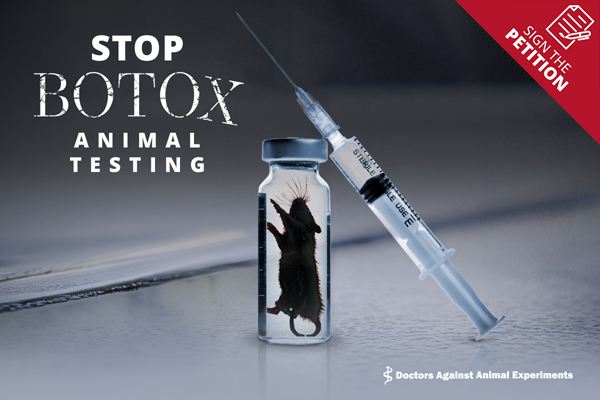
Stop botox animal testing
Each year, more than 100,000 mice are estimated to still be used for botox quality testing – a practice that causes severe suffering and persists despite the availability of scientifically proven non-animal methods for this use. Animal testing for botox continues across Europe, even though suitable non-animal methods have been available for over a decade.
Although the neurotoxin botulinum toxin – commonly known as Botox – is also used for medical purposes, demand is largely driven by aesthetic applications, such as smoothing out facial wrinkles. Nevertheless, Botox is legally classified as a medicinal product and is therefore not covered by the ban on animal testing for cosmetics. At the same time, outdated regulations continue to require animal testing as standard practice at several stages of production. The suffering of mice for the sake of smoothing wrinkles continues. These cruel animal experiments must finally be stopped!
Our demands
- Removal of the botox test on mice from the European Pharmacopeia.
- Mandatory transparency and reporting of animal testing for botox until these tests are abolished.
What is botox?
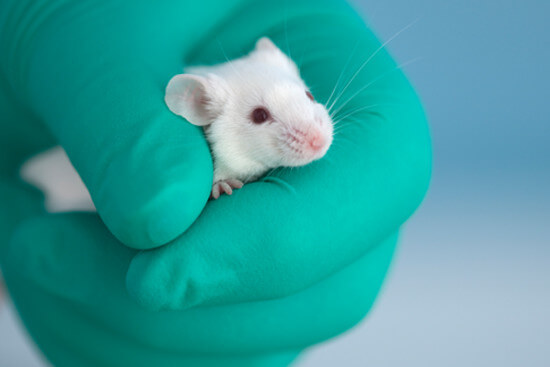
Botulinum neurotoxin, commonly known as ‘botox’, is a naturally occurring paralytic substance and one of the most lethal existing toxins. Throughout routine production, companies repeatedly conduct tests by injecting around 100 mice with varying doses of the substance and observing them for several days. The animals gradually develop paralysis and breathing difficulties, and at higher doses, they die from respiratory failure. Under EU law (Directive 2010/63), this test is officially classified under the highest category of animal suffering: “severe”.
Animal testing for botox is still widespread and unjustified. It continues, particularly in the United Kingdom, Ireland, and until recently in Germany.
Animal-free testing methods
Since 2011, several companies have developed non-animal methods, mostly using (human) cell-based assays, capable of reliably determining the quality and safety of their botox products. These modern approaches not only avoid severe animal suffering but also provide results that are scientifically more relevant to human biology.
Despite the availability of suitable non-animal methods, which manufacturers could validate and use for quality testing their products, companies continue to apply for animal testing licenses. Moreover, under the European Pharmacopoeia – which sets quality standards for medicines in Europe – testing botox products in mice is still the standard.
As a result, the availability of modern non-animal methods has not automatically ended the use of animal testing. This highlights a serious failure in regulatory acceptance, implementation and enforcement.
Legal grey area
Botox can be used to alleviate certain medical conditions including muscle spasms in the neck or eyelids or chronic migraine, but its production is largely driven by aesthetic demand. Animal testing for cosmetic products and the marketing of such products tested on animals has been banned in Europe since 2013.
However, because botox is injectable, it has been classified as a pharmaceutical, exempting it from the cosmetics animal testing ban. Nevertheless, animal tests for botox for aesthetic purposes should be prohibited under EU law because they should not pass the harm-benefit assessment. Their authorisation highlights a fundamental flaw in regulation whereby animal suffering is, in reality, given little consideration.
Lack of transparency
A further concern is the lack of transparency. Information on who approved the project licenses, the number of animals used, and why these tests are conducted is often incomplete or confidential. Citizens are often misled that the use of the tested botox is exclusively medical. This lack of openness undermines public trust and obstructs meaningful accountability.
Let's stop botox animal testing once and for all!
Sign the petition of our umbrella organisation ECEAE now!
Campaign 2007-2023
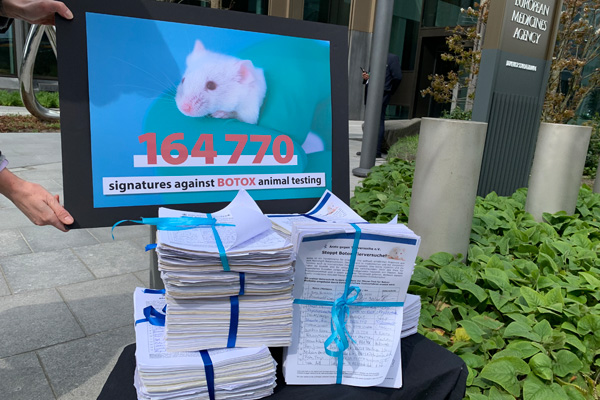
As part of our campaign against animal testing for Botox, we have already handed over signatures on two occasions: in 2012, we submitted over 61,000 signatures to the regulatory authority in Hamburg, and in 2023, together with our international partners of the ECEAE, we submitted over 165,000 signatures to the European Medicines Agency (EMA) in Amsterdam. Information about the campaign 2007-2023 (in German) >>